How to Launch an AI Service in 2 Days — From Hackathon to Startup
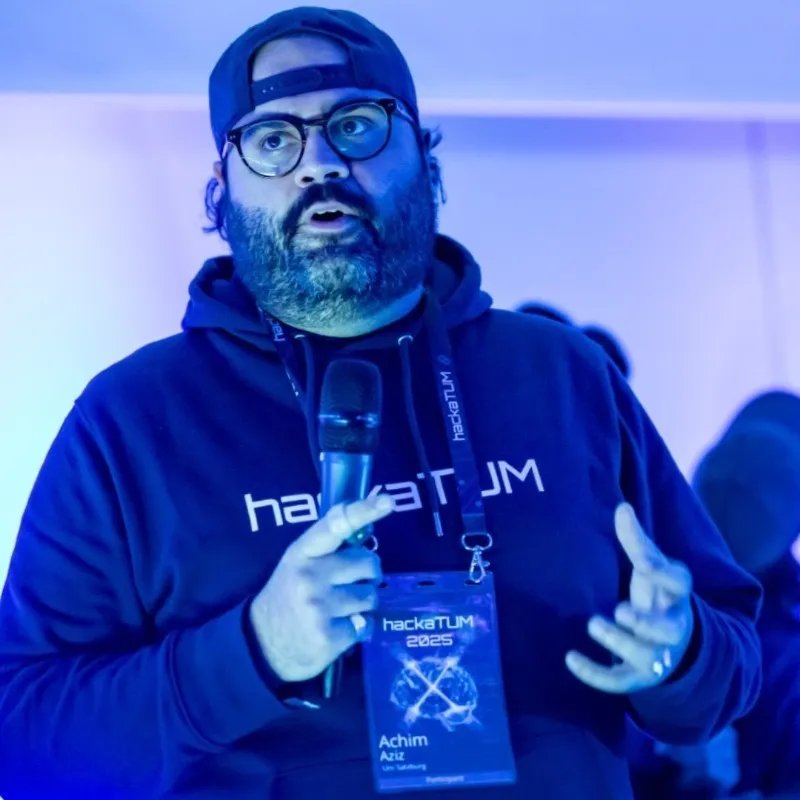
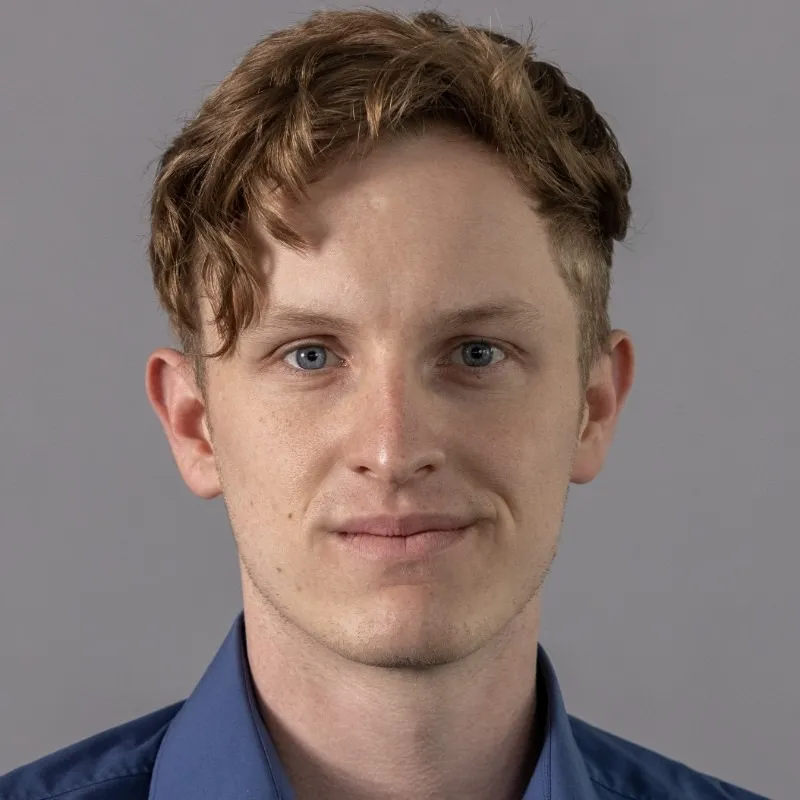
Achim Aziz & Paul Sachse
CEO & CPO, Sinalis
About This Session
Out of 50 teams at the 2025 TUM CDTM Anthropic Hackathon, Achim Aziz and Paul Sachse's team won 3 out of 4 prizes — then went on to win the Tech Europe OpenAI Munich Hackathon and the HackaTUM SAP Challenge. In this GenAI Wednesday fireside chat, they break down exactly how they did it: zero coding on day one, relentless customer validation, a deliberate split between creative and technical tracks, and the conviction that healthcare deserves better AI. They also share what happened next — 50+ user interviews, regulatory reality checks, and the journey from hackathon project to funded startup.
🎯 Key Takeaways
- Validate the problem before you build the solution. Early customer outreach and real conversations created more value than rushing into code.
- Work in parallel, not in sequence. Product development, storytelling, and validation moved at the same time, which accelerated learning and momentum.
- Use AI as leverage across the full startup workflow. The team used AI not only for building, but also for research, communication, and pitching.
Topics Covered in This Session
- ⚡ Speed as strategy: The team spent the entire first evening discussing, validating, and calling real doctors — zero coding until 7am the next day. Their lesson: clarity of problem beats speed of execution.
- 🔁 Build fast. Learn fast. During the hackathon they called Achim's family (three doctors) to validate the idea in real time. Post-hackathon, they ran 50+ user interviews via LinkedIn outreach, converting 5 into letters of intent — and one pilot customer became a business angel.
- 🤝 AI as co-founder: Lovable generated a full UI in minutes. ChatGPT handled market research and idea validation. ElevenLabs powered the voice AI. Cursor accelerated backend development. The team used every AI tool available to compress what would normally take weeks into hours.
- 🧠 Using AI daily: Sinalis now focuses on 4 core use cases: AI anamnesis (pre-appointment patient calls in any language), batch calling (appointment reminders at scale), lab results communication, and no-show reduction — saving practices up to €120,000/year.
- 💥 Hard lessons: EU AI Act classification forced them to cut features that would make the product "high-risk medical AI" (€10-50K in legal costs). Regulation isn't a blocker — it's a design constraint that shaped a better, more focused product.
- 🔭 What's next: Goal: 1,000 connected doctor offices in Germany by end of year. Currently resident at Wayra (Telefónica accelerator) and part of TUM Venture Labs Healthcare. Building bridges between the Munich tech ecosystem and healthcare providers.
- 🏆 Winning the hackathon: Team diversity was key: creative + technical tracks running in parallel. Half the effort went into the video and pitch. Their mantra: "The best product has no impact if you can't sell it."
💬 Live Quotes from Achim & Paul
"Fall in love with the problem first, then with the solution."
— Achim Aziz
"The best product doesn't do anything or has no impact if you can't sell it. And even in a hackathon, you have to sell."
— Paul Sachse
"Never underestimate compounding.* Show up, be present, go to those hackathons."
— Achim Aziz
📘 A little explainer on compounding in startups
In the startup world, compounding isn't just about money — it's about momentum. When a startup "compounds," every small win makes the next win easier, faster, and bigger.
1. Product-Led Growth (The Flywheel)
A great product compounds because your existing users do the work for you.
- Linear Growth: You spend €10 on ads to get 1 customer. To get 100 customers, you must spend €1,000.
- Compounding Growth: 1 customer loves the product and invites 2 friends. Those 2 friends invite 4 more. Your cost per customer drops while your user base explodes. This is the network effect.
2. Knowledge & Talent
In the early days, you and your team are learning.
- Year 1: You struggle to ship one feature a month because you're figuring out the tech.
- Year 3: You have a library of code, established processes, and a team that finishes each other's sentences. You now ship five features a month with the same effort. That internal efficiency compounds.
3. Brand & Trust
Brand is the ultimate compounding asset.
- The first 10 customers are the hardest to get because nobody knows you.
- The 10,000th customer joins simply because "everyone else is using it" — in particular if you are laser-focused on a (sub-)industry in a geographical area and professionals that know each other start talking about your product amongst themselves.
- As your reputation grows, your sales cycle shrinks, and your "moat" (defense against competitors) gets deeper every day.
4. The "Penny Doubling" Trap
Many founders quit too early because compounding is invisible at the start. If you double a penny every day for 30 days:
- Day 10: you only have $5.12. (It feels like a failure.)
- Day 20: you have $5,242. (It's getting interesting.)
- Day 30: you have $5,368,709.
The takeaway: In a startup, the "magic" happens in the final 10% of the timeline. Most of the value is created long after the initial grind.
"We didn't code at all on the first night. We started coding on the very next day."
— Achim Aziz
"Speak as much as you can to the people that you expect that they pay you. Show them that you're interested in their daily doing and their problems."
— Achim Aziz
🏆 How to Win a Hackathon — Lessons from Achim & Paul
Achim and Paul's team won 3 out of 4 prizes at the TUM CDTM Anthropic Hackathon, then repeated at two more events. Here's what they learned about winning — and it has less to do with code than you'd think.
- 🚫 Don't code on day one. Spend the first hours discussing, validating, and aligning. The team didn't write a single line of code until 7am the next morning. Clarity of problem beats speed of execution.
- 📞 Validate with real users — during the hackathon. They called real doctors (Achim's uncle, brother, cousin) to pressure-test the idea before building anything. Even in a 48-hour sprint, customer input changes everything.
- 👥 Build a diverse team. Don't stack five developers. Achim (creative, product, sales) and Paul (backend engineering) complemented each other. Their team split into a "creative track" (video, pitch, story) and a "tech track" (code, integration) — running in parallel.
- 🎬 Invest heavily in the pitch. Half their effort went into the video and presentation. They used ElevenLabs as a background narrator, filmed scenes around TUM's campus with improvised props, and obsessed over details like directional audio and costumes.
- 🎯 Keep the demo radically simple. Two use cases. No database. Everything in memory. No gimmicks, no fine-tuning — just a clear idea and a working prototype. "Too many features is the killer of every early-stage startup."
- ⏰ Manage your energy, not just your time. They never pulled an all-nighter. Finished by midnight, started fresh at 7am. Clear heads produce better work than exhausted marathons.
- ❤️ Pick a problem you genuinely care about. Every team member had a personal connection to healthcare. That shared conviction carried them through the pressure. "This obsession with the mission is what united us despite different backgrounds and ages."
- 🤖 Use every AI tool available. Lovable for UI, Claude for the LLM, ElevenLabs for voice, ChatGPT for research and video scripting, Cursor for coding. They didn't write from scratch — they orchestrated AI tools to move at startup speed.
🎓 How Does a Hackathon Work? Inside the 2025 TUM CDTM Anthropic Hackathon
Never been to a hackathon? Here's what the TUM CDTM Anthropic Hackathon looked like — one of Germany's largest AI hackathons, hosted at the Technical University of Munich.
The Setup
- ~300 participants forming 40–50 teams of up to 5 people
- Team formation via Discord — a public server where strangers pitch themselves and form teams days before the event. Achim joined his team on the very last day.
- Sponsors provide tools and credits — in this case, Anthropic (Claude), Lovable (UI builder), and ElevenLabs (voice AI). Teams get free access to build with.
- Duration: ~48 hours — kicked off Wednesday at 6pm, final deadline Friday at noon
The Timeline
| Wed 6pm | Kickoff. Teams meet, brainstorm ideas, discuss problem spaces. No coding yet. |
| Wed 11pm | Achim & Paul's team stopped for the night — idea validated, direction set. Zero code written. |
| Thu 7am | Day 2 starts. Coding begins. Team splits: tech track (code) + creative track (video, pitch). |
| Thu evening | Core product built. Video filmed around TUM campus with improvised props. |
| Fri morning | Final polish. Video editing ran down to the last 5 minutes before deadline. |
| Fri 12pm | Submission deadline. 30 teams submit. Top 5 selected for the final round. |
How Judging Works
- Top 5 shortlist — jury selects 5 finalists from ~30 submissions
- Demo videos played to 800 people — at TUM's Audimax auditorium
- Audience vote — the crowd picks the winner of the main prize
- Side challenges — sponsors award separate prizes (best design, best voice agent, etc.)
The Prizes
- 🏆 Anthropic Main Prize (audience vote) — won by Vita AI
- 🎨 Lovable Challenge (best designed app) — won by Vita AI
- 🎙️ ElevenLabs Challenge (best voice agent) — won by Vita AI
- 4th prize — the only one they didn't take home
What Makes It Different from a Regular Startup Weekend?
Unlike weekend incubators or accelerator programs, a hackathon compresses everything into hours, not weeks. There are no mentors guiding you. No structured curriculum. You show up with strangers, pick a problem, build something that works, and pitch it — all under extreme time pressure. The constraint is the feature: it forces radical prioritization, fast decision-making, and creative problem-solving. As Achim puts it: "Everything you've ever learned and every mistake you know to avoid — it all counts here."
🏥 The Product — Vita AI / Sinalis
What started as a hackathon prototype evolved into Sinalis, a startup building AI-powered communication tools for healthcare. Here are the four core use cases:
- 🩺 AI Anamnesis: AI calls patients before their appointment — in their mother tongue — so the doctor has a complete picture before the visit even starts. Reduces confusion, improves diagnosis quality.
- 📱 Batch Calling: Scale outreach to thousands of patients simultaneously. Appointment reminders, check-in calls, routine follow-ups — automated but personal.
- 🔬 Lab Results: Proactive phone calls to communicate test results and schedule follow-ups when needed. Replaces the email/SMS gap that many patients (especially elderly) never see.
- 🔔 No-Show Reduction: Personalized phone reminders that reach patients when SMS and email are ignored or missed. Doctor practices lose up to €120,000/year from no-shows — especially costly for specialist departments like radiology.
🛠️ Tools & Tech Stack
| Tool | Role & Impact |
|---|---|
| Lovable | Frontend UI generation. Paul's first time using it — built a fully functional app UI in minutes. Hackathon credits from the sponsor made it free. Freed the team to focus on logic and storytelling instead of pixel-pushing. |
| Anthropic Claude | Core LLM for the AI agent. Powered the conversational intelligence behind Vita AI's patient calls. Hackathon credits provided by Anthropic as the main sponsor. |
| ElevenLabs | Voice AI + video narration. Dual purpose: powered the realistic patient phone calls AND served as background narrator in the pitch video. The voice quality impressed a VC during a live demo on Day 2. Other teams didn't think to use it for video narration — that creative edge helped win the ElevenLabs Challenge. |
| Twilio | Phone number provisioning. Getting a number fast was harder than expected — they ended up with a Finnish number, but it worked. Essential infrastructure for making the AI-to-patient calling prototype functional. |
| Cursor | AI-assisted backend coding. Paul's tool of choice: "I like the quick, fast, iterative way of Cursor." Used for backend logic while Lovable handled the frontend — the combination compressed weeks of development into hours. |
| ChatGPT | Research, validation & creative. Triple role: market research during ideation ("what's needed in healthcare, what's the blocking points"), stress-testing ideas, and organizing Achim's video script — he voice-recorded his notes while driving home and had ChatGPT structure them into a shot list. |
🚀 From Hackathon to Startup
After winning, the team didn't stop. They took Vita AI from prototype to pilot through systematic validation and the Munich startup ecosystem:
- 🎪 Bits & Pretzels: Won tickets, pitched VCs, and had their first conversation with Microsoft's Michael Zanow — who remembered the exchange months later.
- 📊 50+ user interviews: Systematic LinkedIn outreach to doctors matching their ideal customer profile. Result: 5 letters of intent and a pilot customer who became a business angel.
- ⚖️ Regulatory reality check: EU AI Act forced feature cuts — anything classified as "high-risk medical AI" would require €10-50K in legal compliance. The constraint focused the product.
- 🏢 Ecosystem support: Residents at Wayra (Telefónica accelerator), part of TUM Venture Labs Healthcare, and leveraging the broader Munich startup infrastructure (UnternehmerTUM, Strascheg Center).
- 🎯 2026 goal: 1,000 connected doctor offices in Germany.
🎯 Who This Session Was For
Founders, hackathon participants, startup teams, product builders, AI practitioners, healthcare innovators, and anyone curious about turning a weekend project into a real company.
Speaker Bios
Achim Aziz — CEO & Co-Founder, Sinalis
Product builder focused on AI systems with real-world impact. Previously worked at a Y Combinator startup. Leads vision, product strategy, and go-to-market at Sinalis, driving the company from hackathon concept to pilot customers. Passionate about making healthcare technology accessible — drawing from personal connections to the medical field.
Paul Sachse — CPO & Co-Founder, Sinalis
Software engineer with three years of corporate experience, transitioning to entrepreneurship. Leads product development and technical execution at Sinalis. Translates complex healthcare requirements into user-centered AI products and oversees the transition from prototype to market-ready applications.
📎 Resources
PITCH & PEOPLE #16: Sinalis
Achim and Paul tell the full Sinalis story on Munich Startup's podcast. Listen on your favorite platform:
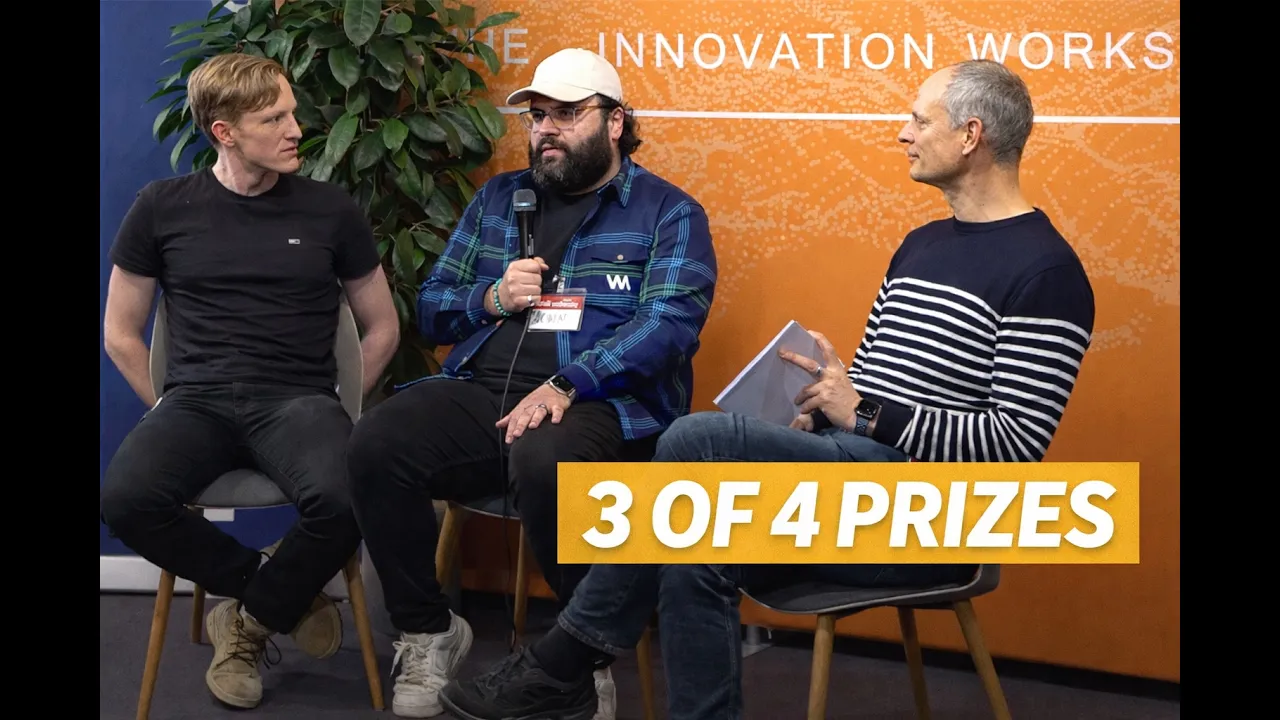
🎬 Full Fireside Chat
Tagged with
📌 Related GenAI Wednesday Sessions
- How Mindfuel Embeds AI into Every Corner of the Company — Max Koennings
- AI in the VC Industry — Dr. Andre Retterath
- Build Legal Tools with AI — Patrick Munro
Want more practical AI talks in Munich? Explore upcoming GenAI Wednesday events.
Event Details
- Venue: jambit GmbH, jambit MeetHub, Birketweg 21, 80639 München
- With the kind support of PLANIT // LEGAL & jambit GmbH