AI Resources for Founders, Builders & Operators
Curated for founders, builders, operators, and serious newcomers — not a giant directory, a recommended path.
The practical guide to AI newsletters, free courses, and operator resources worth your time.
The AI space moves too fast for a one-off course to be enough. Start with a few high-signal newsletters. Build real foundations with a free course. Then learn how to use AI as leverage for startup work, strategic analysis, and better decision-making.
Start here
If you want the shortest useful path:
- Subscribe to 2–3 newsletters to stay close to the field.
- Take 1 foundational course to build judgment.
- Use AI on real work — research, strategy, positioning.
- Go deeper on a platform only when it matters.
A strong default mix:
- Lenny's Newsletter / How I AI — founder and operator relevance
- The Rundown AI — broad daily awareness
- Elements of AI or AI for Everyone — foundations
- Generative AI for Everyone — practical fluency
How we picked these resources
We favor resources that are practical, current, and genuinely useful for building or operating real products. Beginner-friendly where possible.
📬 Best AI Newsletters
Newsletters come first because they create cadence. They keep you close to the field, surface new tools and workflows, and help founders and operators stay in motion.
Lenny's Newsletter / How I AI
The Rundown AI
Superhuman AI
AI Secret
The AI Corner
MyClaw Newsletter
🎓 Free Foundational Courses
Build real foundations. Understand how AI works, what modern models can and cannot do, and where the limits are. That makes you harder to fool and much better at using the tools.
Elements of AI
Generative AI for Everyone
ChatGPT Prompt Engineering for Developers
MIT — Introduction to Deep Learning
Harvard CS50 — Intro to AI with Python
Recommended course path
- Elements of AI — conceptual grounding (no code, no math)
- Generative AI for Everyone — GenAI fluency for the current moment
- ChatGPT Prompt Engineering — practical applied layer
- MIT Deep Learning or Harvard CS50 AI — deeper technical understanding
🚀 Founder & Operator Resources
AI is not just a tool stack. Used well, it can act like an additional startup team member — helping with market research, competitor analysis, messaging, workflow design, sales support, and early product thinking.
OpenAI Academy
How to Start a Lean, AI-Native Startup
Y Combinator — Requests for Startups
a16z — Insights for Enterprise AI Builders
First Round Review
OpenAI Grove
🧠 AI as Your Strategic Analyst
One of the most practical uses of AI is strategic analysis. Used well, it acts like a fast first-pass analyst for almost any job — scanning opportunities, pressure-testing ideas, comparing competitors, surfacing blind spots faster.
- Opportunity scanning — adjacent markets, product angles, under-served niches
- Competitor mapping — positioning, claims, gaps, likely weaknesses
- Risk & threat analysis — technical, regulatory, market, or operational issues
- Customer research — segments, objections, buying criteria, patterns
- Product strategy — roadmap options, tradeoffs, dependencies, second-order effects
- Sales & positioning — messaging, objection handling, discovery questions, value framing
- Regulatory tracking — first-pass summaries of new obligations and emerging constraints
Best mental model
Use AI like a junior analyst for speed, a research partner for breadth, and a thinking partner for pressure-testing. Not the final decision-maker. Always verify the important parts in the real world.
Start by telling AI exactly what you want to accomplish — the clearer you frame the task, the better it performs. Use it to set up the first draft of any analysis, framework, or plan, then refine from there.
Further reading
- StrategyFrame.ai — a consulting firm building an AI-powered platform for strategy development and execution, aimed at mid-market companies
- McKinsey — How AI Is Transforming Strategy Development — big-picture perspective on how AI is changing the way organisations develop strategy
🔧 Platform-Specific Paths
Not the first stop for most people. These matter once you know the basics and want to go deep on a specific stack.
Anthropic Academy
Claude Certified Architect — Foundations
🧭 Choosing the right AI builder interface
Different AI builder tools use different interfaces. Some work in the browser. Some feel like visual editors. Some run as desktop apps. Some plug into your terminal or IDE.
Claudable
Claudable is an open-source Lovable-style app builder for local AI coding agents. It is strongest when you want to prototype interactive web apps with live preview, deployment support, and optional full-stack integrations.
website-builder takes a narrower route: it focuses on fast, content-heavy Astro websites with SEO metadata, schema markup, accessibility checks, link tests, and quality gates.
Other tools in this space include visual website builders such as Webstudio, browser-based agentic builders such as OSW Studio, and Bolt-style prompt-to-app platforms. They are worth exploring when you want a visual editor, browser-native build environment, or full-stack app prototyping.
❓ FAQ
Which AI newsletters are actually worth reading?
Start with two or three, not ten. A strong default: Lenny's Newsletter / How I AI, The Rundown AI, and one more based on your interests — Superhuman AI for quick ideas, or MyClaw for agent-focused signal.
Why start with newsletters?
Because they create cadence. They keep you engaged with new tools, ideas, workflows, and market shifts. In AI, that ongoing exposure matters more than a single course.
Which free AI course should I start with?
Start with Elements of AI for a broad, accessible foundation. Then take Generative AI for Everyone for current GenAI fluency. For something more technical: MIT Introduction to Deep Learning or Harvard CS50 AI with Python.
Is there a free MIT class on AI?
Yes. MIT's Introduction to Deep Learning is one of the strongest free technical AI resources available.
Can AI really act like an additional startup team member?
Yes, within limits. It compresses research, drafting, analysis, synthesis, and preparation. It cannot replace judgment, validation, or customer truth.
Can AI act as a strategic analyst?
Yes — one of its best practical roles. Use it to expand options, surface risks, compare alternatives, and pressure-test thinking. Then verify the important parts in the real world.
How many AI newsletters should I subscribe to?
Two to three is enough. More than that usually turns into noise.
🎥 Worth watching
One big-picture talk that reframes the whole AI debate in economic terms — worth it before you go deeper on any tool above. The lecture runs about 42 minutes, plus audience questions.
Video · Stanford GSB
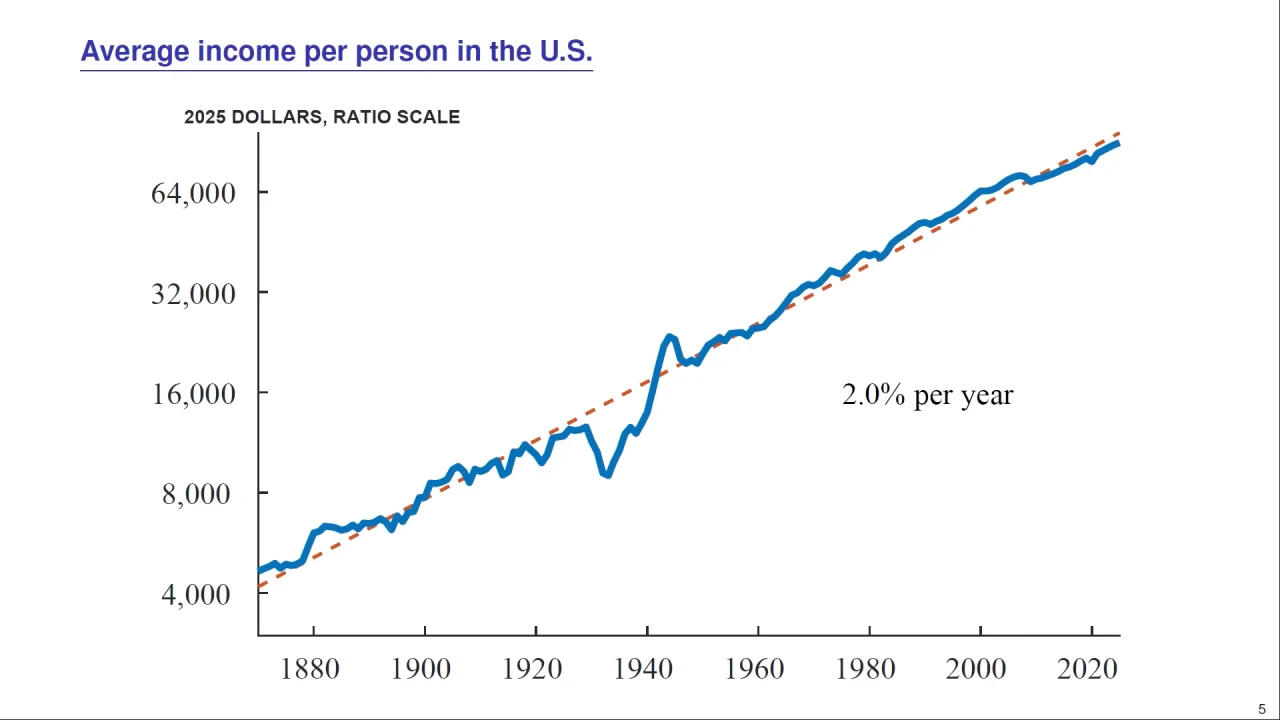
Will AI change the average income per person — which has stayed remarkably stable?
For 150 years, average income per person in the U.S. has climbed at a remarkably steady ~2% a year — straight through wars, crashes, and one technological revolution after another. What if machines — AI for cognitive tasks, AI plus robots for physical ones — could do every task a human can, but more cheaply? In "A.I. and Our Economic Future", Stanford economist Chad Jones asks the obvious question nobody can answer yet: is AI just the next point on that line, or the force that finally bends the curve?
▶ Watch on YouTubeUse this page as your self-study path — and come to GenAI Wednesday Munich to meet people applying these ideas in real projects. A free AI community for founders, builders, and operators in Munich. Get in touch via LinkedIn or join on Luma.
AI moves fast, so we favor resources that still feel useful for builders and operators now.